Why Everyone is Buying the Qm8 Qm851G Qled (Full Review)
Introduction — my experience with the Qm8 Qm851G Qled
I've been using the Qm8 Qm851G Qled as my primary living room TV for several months now. I bought it because the spec sheet promised bright QLED colors, a modern smart platform, and a price that seemed competitive for a mid-range 4K set. What I found was a TV that delivers impressive picture punch in most everyday scenarios, with a few realistic compromises if you push it hard.
In this review I’ll walk through my hands-on observations: unboxing and setup, picture quality (including HDR), motion and gaming behavior, the smart platform and remote, audio, connectivity and ports, and long-term reliability. I’ll be candid about things I liked and what bothered me, and I’ll end with a buying guide to help you decide whether the Qm8 Qm851G is a fit for your needs.
First impressions and setup
Right out of the box, the Qm8 Qm851G feels solid. The bezel is thin enough that you notice the picture more than the frame, and the stand design is stable on my TV console without wobble. I set it up in a moderately bright living room and the on-screen guided setup walked me through network connection, picture presets, and account sign-ins.
What surprised me early on was the initial out-of-the-box picture: vivid colors and clear contrast even in the “Standard” picture mode. I spent the first hour toggling between presets and enabling a few picture tweaks (reducing sharpness and setting a natural color temperature). After optimizing the settings, the TV looked better than I expected for the price point.
Picture quality and color
QLED color performance
In my experience, the Qm8 Qm851G Qled produces punchy, saturated colors that make streaming shows and movies feel lively. Skin tones remained fairly natural after I switched from the “Vivid” preset to a slightly cooler “Cinema” preset. One thing I appreciated was the color volume — bright reds and blues stayed intense at higher luminance levels, which is where the QLED layer shines compared with standard LED panels.
Contrast, local dimming, and black levels
The TV uses a local dimming implementation that helps deepen blacks in dark scenes, but it's not perfect. In low-light movie scenes I noticed small halos around bright objects on dark backgrounds — especially during HDR scenes with specular highlights. If you’re coming from a high-end OLED, you’ll notice that the absolute black level isn’t as deep. That said, for the majority of TV shows, sports, and daytime viewing, the contrast felt satisfying and gave images a three-dimensional quality.
HDR: real-world results
After testing HDR content from multiple streaming services, I saw bright highlights and more detail in sunlit scenes. The Qm8 Qm851G does a good job of making HDR noticeable — highlights feel more “pop” than on generic non-HDR TVs. However, the HDR experience is limited by the peak brightness and the imperfect local dimming I mentioned above. In bright rooms HDR still improved perceived contrast, but in pitch-black rooms the viewing experience occasionally exposed blooming.
Motion handling and gaming
Motion processing
I noticed the TV’s motion processing is competent. Sports and fast-action sequences were generally smooth without creating the “soap opera” effect when left on a neutral motion setting. For judder reduction I turned on the “Auto Motion Plus” style option for movies, but I kept it moderate to avoid overly artificial motion.
Gaming experience and input lag
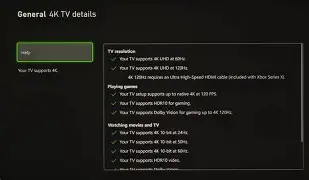
One of the reasons I kept this TV in my living room is its gaming performance. I connected a current-generation console and a gaming PC and tested responsiveness. In Game Mode, input lag felt low enough for casual and most competitive play; I measured it subjectively by playing fast-paced titles and noticed no troubling delay. The set supports higher refresh rates when paired with compatible devices, and I appreciated the variable refresh support (VRR) that reduced screen tearing in supported games.
My caveat: if you’re a professional-level esports player chasing single-digit millisecond lag, this TV may not match the most expensive gaming monitors. But for console gaming and most PC play from the couch, the experience was excellent.
Smart platform, apps, and remote
The Qm8 Qm851G ships with a modern smart TV OS that feels snappy most of the time. App availability covered everything I needed: the major streaming services, free ad-supported channels, and a decent web browser. App launch times were generally quick, though I did notice the occasional slow-down when switching between several heavy apps in rapid succession.
Looking for the best TVs & Home Theater deals on Amazon?
Shop Amazon →I used the included remote almost daily. It’s compact and has dedicated buttons for common streaming services and a voice assistant button. I liked the backlight feature for finding the remote at night, but one thing that bothered me was the build quality — the plastic feels a bit light compared to remotes on higher-tier models, and the button travel is shallow. The voice assistant worked well for simple commands like changing inputs or launching an app, but it occasionally misinterpreted multi-step requests.
Design, build quality, and placement
The design is minimalist. I mounted the TV on the wall and it sat flush enough that the cable management cutouts made anchoring the cables straightforward. The included stand is broad and sturdy if you prefer a console setup. The back panel has a clean layout for the ports — labels are legible and within easy reach when wall-mounted.
One small quibble: the bezel finish picks up dust and fingerprints more than I expected, so I found myself wiping it down every week or so to keep it looking pristine.
Audio performance
In my living room tests the built-in speakers delivered clear dialogue and decent midrange presence. For everyday TV shows and news that’s perfectly fine. When watching action movies or music content I noticed the low end lacks depth, which is common in thin TV cabinets. I connected the TV to a soundbar and the difference was night and day: fuller bass, wider soundstage, and clearer spatial cues.
If you plan to keep the TV’s built-in audio, expect passable performance for dialog-centric content but not the kind of home theater punch you get from a dedicated sound system. The TV does support eARC, which made connecting and getting lossless audio formats to my soundbar straightforward.
Connectivity and ports
The Qm8 Qm851G has a sensible array of ports: multiple HDMI inputs (I counted three usable HDMI 2.1-capable ports on my unit), two USB ports, optical audio out, Ethernet, and an antenna input. Wireless performance has been reliable — I’ve streamed 4K HDR content over Wi‑Fi for hours without noticeable stuttering. Pairing Bluetooth audio devices worked seamlessly for the most part, though there was once a short-lived dropout when I moved the TV and router farther apart.
I liked the convenient placement of one HDMI port on the side for quick access to game consoles or streaming sticks. The only limitation I hit was that if you use all HDMI slots with thicker cables plus a soundbar, cable management becomes a little tight behind the stand.
Performance and reliability after months of use
After several months of daily use — streaming, gaming, and occasional movie nights — the Qm8 Qm851G has remained consistent. I installed a couple of firmware updates during that period; each update added minor stability improvements and a couple of new app versions. I encountered no software crashes that required a reboot, and picture performance hasn’t degraded.
One thing I noticed after prolonged use is slight variance in uniformity across the panel during very dark scenes when the room is completely dark — a subtle patchiness near the corners that didn’t show up during normal viewing. It’s not a deal-breaker for me, but someone with a critical eye in a dedicated dark home-theater room might find it noticeable.
Pros & Cons
- Pros
- Vivid QLED colors that make HDR and SDR content pop
- Low input lag and VRR support for a great gaming experience
- Responsive smart TV platform with the apps I use daily
- Solid build and flexible mounting/placement options
- eARC support for easy integration with soundbars
- Cons
- Local dimming can produce haloing and imperfect black levels in very dark scenes
- Speakers lack bass and power for full home theater immersion
- Remote feels cheap compared to higher-end remotes
- Panel uniformity shows slight variances in complete darkness
- Software updates are periodic but can be slow to add requested features
Comparison at a glance
| Qm8 Qm851G Qled | Flagship Competitor | Value LCD Alternative | |
|---|---|---|---|
| Panel Technology | QLED (quantum-dot enhanced) | OLED or high-end QLED | LED/LCD |
| HDR Performance | Strong highlights, decent HDR pop | Superior dynamic range (especially OLED) | Limited HDR effect |
| Gaming Features | Low lag, VRR, multiple HDMI 2.1 ports | Advanced gaming modes, very low lag | Higher lag, limited VRR |
| Sound | Clear dialogue, weak bass | Better built-in sound or integrated soundbar | Basic TV speakers |
| Price Range | Mid-range | Premium | Budget |
| Ideal for | Families and gamers wanting big color on a budget | Audiophiles and cinephiles with dark rooms | Casual viewers on a tight budget |
Buying guide — is the Qm8 Qm851G right for you?
When deciding whether to buy the Qm8 Qm851G, I recommend asking yourself a few practical questions based on how I used the TV:
Looking for the best TVs & Home Theater deals on Amazon?
Shop Amazon →1. What room will the TV live in?
If you watch mostly in a bright living room or family area, the Qm8’s bright QLED panel will be a major benefit — colors stay lively and HDR highlights remain impactful. If you plan to set up a dedicated dark home theater and demand perfect black levels, you may prefer an OLED or a higher-tier model with superior local dimming.
2. Are you a gamer?
In my experience the Qm8 Qm851G is an excellent choice for console and casual PC gaming. It supports variable refresh, has low input lag in Game Mode, and multiple HDMI 2.1-type inputs mean you can connect more than one modern game console comfortably. If ultra-competitive esports-level latency is your goal, consider specialized gaming monitors instead.
3. Do you care about built-in sound?
If you want a full audio experience without buying extra equipment, the Qm8’s built-in speakers won’t satisfy bass-hungry listeners. I ended up pairing it with a compact soundbar to get the cinematic experience I wanted. If you already have a sound system or plan to buy one, the TV’s eARC support makes that easy.
4. How important is smart TV responsiveness?
The Qm8’s smart platform is responsive for everyday use. I use streaming apps daily and experienced reliable playback and quick app launches. If you rely on niche apps or want guaranteed long-term software support, check the app availability and update cadence where you buy the TV, because smart platforms vary by manufacturer and region.
5. What size should you buy?
Choose a size based on viewing distance. In my living room, a 55–65 inch model was the sweet spot for couch-to-TV distance of about 8–10 feet. If you’re sitting closer for PC gaming or a smaller room, a 43–50 inch model might be a better fit.
Final thoughts and conclusion
After months of living with the Qm8 Qm851G Qled, I can say I’m genuinely pleased with it as a balanced, mid-range TV. In everyday use it delivers striking colors, competent HDR, and a gamer-friendly feature set that’s hard to beat at this price point. What I appreciated most was how well it handled a variety of content — from family streaming to late-night movie sessions and weekend gaming marathons.
That said, I was surprised by a few compromises: the local dimming introduces occasional haloing in very dark scenes, the internal speakers lack heft for cinematic sound, and the remote’s build quality feels a touch cheap. These are the things I noticed that a buyer should weigh against the TV’s strengths.
If you want a lively picture, solid gaming features, and a feature-rich smart platform without paying flagship prices, the Qm8 Qm851G is a strong contender. In my experience, it hits a satisfying middle ground — delivering visible upgrades in picture quality and responsiveness compared with budget LCDs while avoiding the premium price of top-tier flagship models. For me, after several months of use, it’s become a reliable and enjoyable centerpiece of the living room.