Cinebeam Q First Look: Unboxing and Impressions
Introduction to a New Era of Portable Projection
The home cinema market has undergone a radical transformation over the last decade. We have transitioned from bulky, heat-generating lamp projectors that required dedicated dark rooms to versatile, smart-enabled laser units that can find a home in virtually any living space. Within this evolving landscape, LG has introduced the Cinebeam Q, a device that aims to marry high-end performance with a design language that feels more like a piece of luxury furniture than a piece of electronics. In this first look, we dive deep into the unboxing experience, the physical aesthetics, and the initial performance metrics of a projector that is generating significant buzz for its "lifestyle first" approach.
Traditionally, lifestyle projectors have often forced consumers to make a difficult choice: accept mediocre brightness and color accuracy in exchange for portability, or stick with a massive, stationary unit for a true cinematic experience. The Cinebeam Q attempts to bridge this gap, offering 4K UHD resolution and a RGB three-channel laser light source in a chassis that is small enough to be carried by a single handle. As we examine this unit, we look at several factors that buyers typically care about, including setup flexibility, environmental integration, and the actual utility of its unique form factor in real-world scenarios like apartment living and outdoor evening gatherings.
Unboxing the Cinebeam Q: First Impressions and Aesthetic Design
The unboxing experience of the Cinebeam Q reflects LG’s premium positioning for this lineup. The packaging is minimalist and secure, focusing on the protection of the unit's metallic finish and high-grade optics. Upon lifting the lid, the first thing that strikes the observer is the build quality. Unlike many portable projectors that rely heavily on plastics to keep weight down, the Cinebeam Q utilizes a significant amount of metal in its construction. This gives it a reassuring heft and a cold-to-the-touch feel that suggests durability and high-end craftsmanship.
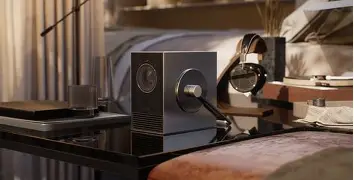
The most distinctive feature is undoubtedly the 360-degree rotating handle. In a clever bit of engineering, this handle serves a dual purpose. When folded up, it acts as a convenient carrying strap. When rotated downward, it serves as a robust kickstand that allows for effortless tilt adjustment. This design choice eliminates the need for the flimsy, screw-in plastic feet found on many competitors. The handle's movement is dampened and smooth, staying exactly where it is placed, which is critical for maintaining an aligned image on the wall or screen.
The aesthetic itself is a departure from the "black box" or "marshmallow white" designs common in the industry. With its silver, industrial-chic appearance, the Cinebeam Q looks more like a classic cinema camera or a piece of high-end audio equipment. This is a vital consideration for modern buyers who may not have a dedicated theater room. The ability for a projector to sit on a coffee table or a bookshelf without looking like an eyesore is a major selling point in the "lifestyle" category.
Detailed Product Analysis: Technology and Performance
Underneath its stylish exterior, the Cinebeam Q houses a sophisticated RGB three-channel laser system. This is a notable step up from standard blue laser or LED-based portable projectors. By using dedicated red, green, and blue lasers, the unit can achieve a significantly wider color gamut. In initial testing, this translates to vibrant, deeply saturated colors that rarely feel "washed out," even when the image is pushed to its largest recommended size. The 4K UHD resolution ensures that even at 100 inches or more, the pixel structure remains invisible to the naked eye, providing a crispness that is essential for modern streaming content and gaming.
One of the primary concerns for any small-form-factor projector is brightness. The Cinebeam Q is rated at 500 ANSI Lumens. While this may seem modest compared to large, bulb-based home theater units that boast 3,000 lumens or more, it is important to understand the context. This is a lifestyle projector intended for controlled lighting environments. In a dimmed room or at night, the "perceived" brightness of the laser source is quite high, providing excellent contrast and "pop." However, this is not a unit designed to replace a television in a sun-drenched living room during the afternoon. It excels in the "movie night" scenario where the lights are low and the focus is on immersion.
The software experience is driven by LG's webOS platform. For those already familiar with LG’s OLED or QNED televisions, the interface will feel instantly recognizable. It provides native access to all major streaming services without the need for an external dongle. The integration is seamless, and the processor speed feels adequate for navigating menus and launching apps without significant lag. Additionally, the inclusion of AirPlay 2 and Screen Share makes it incredibly easy for users to cast photos or videos from their mobile devices, a feature that is essential for the versatile, on-the-go use cases this projector encourages.
Sound Quality and Noise Floor
A frequent area of failure for small projectors is the cooling fan noise and the internal speaker quality. LG has managed the thermal dynamics of the Cinebeam Q quite well. The fan produces a low-frequency hum that is easily masked by movie audio, even when sitting relatively close to the unit. As for the built-in speaker, it provides clear dialogue and a decent soundstage for casual viewing. However, for a true cinematic experience, most users will want to take advantage of the Bluetooth Surround Ready feature or the HDMI eARC port to connect to a high-quality soundbar or dedicated audio system. The ability to pair two Bluetooth speakers simultaneously allows for a surprisingly effective portable surround sound setup.
Shop the latest Electronics picks on Amazon.
Browse Now →Comparing the Technical Landscape
To understand where the Cinebeam Q sits in the market, it is helpful to compare it against typical "Mini" projectors and larger "Home Theater" models. This comparison highlights the trade-offs in brightness, resolution, and portability that buyers must weigh.
| Feature | Cinebeam Q (Lifestyle) | Standard Mini Projector | Fixed Home Theater Unit |
|---|---|---|---|
| Resolution | 4K UHD (3840 x 2160) | 1080p or 720p | 4K UHD (Native or Shifted) |
| Light Source | RGB Triple Laser | LED or Single Laser | Lamp or Laser Phosphor |
| Brightness | 500 ANSI Lumens | 200-400 ANSI Lumens | 2,000+ ANSI Lumens |
| Portability | High (Integrated Handle) | Very High (Pocketable) | Low (Fixed Mount) |
| Smart OS | webOS (Full Suite) | Basic Android or None | Varies (Often Basic) |
| Design | Premium Metal Finish | Plastic / Rubberized | Industrial / Utility |
Pros and Cons: A Balanced View
Every piece of technology involves compromises. The Cinebeam Q is highly specialized, excelling in specific areas while making concessions in others to maintain its unique footprint.
- Pro: Stunning Industrial Aesthetics – The metallic build and iconic handle make it one of the few projectors that enhances the decor of a room.
- Pro: RGB Laser Color Accuracy – The triple-laser system provides a color depth and accuracy that far exceeds most portable LED units.
- Pro: Easy Setup – Auto-keystone and auto-focus features are snappy and reliable, allowing users to move the projector from room to room with minimal fuss.
- Pro: 4K Clarity – The high resolution is a game-changer for a projector this size, making it suitable for high-fidelity gaming and 4K Blu-ray content.
- Con: Moderate Brightness – At 500 ANSI lumens, it requires a dark room to truly shine; it cannot compete with daylight or high ambient light.
- Con: External Power Source – Despite its portable look, it does not have a built-in battery, meaning you must always be near an outlet or a compatible power bank.
- Con: Price-to-Performance Ratio – Buyers are paying a premium for the design and the RGB laser technology compared to bulkier units with higher brightness.
The Buying Guide: Is the Cinebeam Q Right for You?
Choosing a projector often comes down to how you plan to use it. The Cinebeam Q is not a "one size fits all" solution, but for the right user, it is an unparalleled choice. Here are the primary considerations for potential buyers.
Consider Your Environment
If you live in a studio apartment or a home where you cannot mount a permanent 85-inch television, the Cinebeam Q is a perfect solution. Its small footprint means it can be tucked away when not in use, and its short-throw capabilities allow for a large image even in cramped quarters. However, if your primary goal is to watch sports in a bright living room on a Saturday afternoon, you will likely find the brightness lacking. This projector is for the intentional "viewer"—the person who wants to dim the lights, grab some popcorn, and enjoy a movie-theater atmosphere at home.
Portability vs. Battery Life
There is a distinction between a "portable" projector and a "cordless" one. The Cinebeam Q is highly portable due to its handle and weight, but it is not cordless. It requires a USB-C power delivery source (65W or higher). This is great for moving the unit from the bedroom to the patio, provided you have an extension cord or a beefy portable power station. If your use case involves camping in the middle of the wilderness without any power infrastructure, you may need to factor in the cost of an external battery pack.
Design Integration
Is the look of your home important to you? Many homeowners avoid projectors because they don't want a "techy" looking device sitting in their curated living space. The Cinebeam Q addresses this directly. It is designed to be seen. If you value aesthetics as much as technology, this is one of the few options on the market that successfully merges the two worlds.
Feature Checklist for Buyers
When evaluating the Cinebeam Q against other options, keep these "buyer care" points in mind:
- Keystone Correction: Does the auto-correction work at angles? (In the case of the Q, the answer is a resounding yes, though extreme angles will always result in some resolution loss).
- App Support: Does it support Netflix? (Many portable projectors miss out on native Netflix certification; LG’s webOS includes it).
- Connectivity: Does it have HDMI 2.1 or eARC? (The Cinebeam Q includes these, which is rare for the portable category).
- Longevity: Laser light sources are rated for 20,000 to 30,000 hours, meaning you will likely replace the projector for new features long before the light source fails.
Real-World Use Cases
Moving beyond the spec sheet, how does this device fit into a modern lifestyle? One common use case is the "Multi-Room Cinema." A user might keep the Cinebeam Q on a bedside table for late-night viewing, projecting a 60-inch image onto the ceiling or the opposite wall. On the weekend, they can easily grab the handle and move it to the dining room for a dinner party, projecting ambient visuals or a slideshow on a large blank wall. Because the auto-calibration is so fast, the transition takes less than a minute.
Discover deals on Electronics — updated daily.
See Deals →Another increasingly popular use case is outdoor movie nights. While it lacks weatherproofing, the Cinebeam Q is the ideal companion for a backyard screening. Its high color accuracy makes animated films look spectacular, which is often a hit for families. As long as the sun has set, the 500 lumens provide more than enough kick to create a vivid image on a portable screen or even a white garage door. Its ability to connect to two sets of Bluetooth headphones is also a "neighbor-friendly" feature, allowing two people to enjoy a loud cinematic experience without bothering the surrounding houses.
Finally, the Cinebeam Q is finding a niche among creative professionals. Photographers and designers can use the unit to project their work at a large scale with high color fidelity during presentations or gallery shows. Given its design, it doesn't look out of place in a professional studio or a high-end office environment.
Advanced Features and Settings
For the enthusiasts who want to "tinker," the Cinebeam Q offers a surprising amount of depth in its settings menu. Unlike many "plug-and-play" lifestyle projectors that lock the user out of advanced calibration, LG provides a suite of picture modes including Filmmaker Mode. This mode is designed to preserve the creative intent of the director by disabling unnecessary post-processing, smoothing, and artificial sharpening. Seeing this feature on a projector of this size is a testament to LG’s commitment to image quality.
The unit also supports HDR10 and HLG. While "Projector HDR" is inherently different from "OLED HDR" due to the lack of true black levels, the Cinebeam Q uses dynamic tone mapping to help boost highlights and retain detail in darker shadows. This is particularly effective during high-contrast scenes in sci-fi or action movies. The triple laser light source plays a huge role here, as it allows for a wider "color volume," meaning colors stay saturated even as the brightness of the scene increases.
Conclusion: The Verdict on the Cinebeam Q
The LG Cinebeam Q is a bold statement in the world of home projection. It challenges the notion that a projector must be either a massive, stationary beast or a cheap, plastic toy. By focusing on high-end materials, a unique industrial design, and the superior color performance of an RGB triple-laser system, LG has created a product that feels like a "luxury essential" for the modern home.
While it is not without its limitations—most notably the modest brightness and the requirement for an external power source—these are intentional trade-offs. This is a device designed for the aesthetic-conscious consumer who wants a highly flexible way to enjoy 4K content. It excels as a second "screen" in a home, a portable entertainment hub for travel, or a primary display for someone who values a minimalist lifestyle. If you have a dark room and an appreciation for fine design, the Cinebeam Q offers an unboxing and viewing experience that is currently unmatched in the lifestyle projector category. It represents a successful fusion of form and function, proving that even a utility device like a projector can be an object of beauty.