Biggest Nacon Revosim Racing Wheel Buying Mistakes (And How to Avoid Them)
The Nacon Revosim racing wheel has attracted attention from sim-racing enthusiasts who want a step up from basic controllers without committing to the higher price and complexity of direct-drive systems. Like any product in a crowded market, buyers make predictable mistakes when choosing a Revosim — mistakes that lead to frustration, underperformance, and wasted money. This article walks through the most common errors buyers make with the Nacon Revosim racing wheel (and similar models), explains why they matter in real-world use, and offers practical guidance to avoid them.
Introduction: Why buyers get tripped up
Sim racing sits at the intersection of hardware, software, ergonomics, and user expectations. The Nacon Revosim is positioned as a performance-focused peripheral for players who want more realism than a standard gamepad but aren’t ready for high-end rigs. Buyers often underestimate the degree to which platform compatibility, cockpit setup, pedal quality, and software configuration affect the final experience. As a result, a promising product can deliver disappointing results if purchased or used incorrectly.
This piece focuses on real-world scenarios — from console players wanting plug-and-play simplicity to PC racers aiming to tune force feedback for specific titles. It assumes the reader is evaluating the Nacon Revosim family as a potential purchase and wants to avoid the common pitfalls other buyers have encountered.
Detailed product analysis: What the Nacon Revosim offers — and what it doesn’t
The Nacon Revosim line targets mid-range sim racers. In practice, that means a mix of hardware features intended to balance performance and price. Core selling points typically include a solid-feeling wheel rim with multiple button inputs and paddles, force feedback tuned for console/PC use, and bundled or optional pedal sets. Where the Revosim often differs from higher-tier solutions is in the FFB architecture, degree-of-rotation presets, and upgrade paths.
Real-world users report that the Revosim delivers a noticeably better tactile experience than basic wheels bundled with consoles, especially when paired with a good pedal set and mounted securely to a cockpit. It tends to shine in focused use cases such as rally and GT-style driving where the wheel's feedback and rim ergonomics enhance immersion without overwhelming the user with raw torque.
However, buyers who assume the Revosim will match the sensation and responsiveness of direct-drive wheels — or expect instantly realistic force feedback without setup — are often disappointed. The Revosim class commonly uses geared or belt mechanisms with tuned motors. That design provides compelling feedback for many users but also introduces limitations: less linearity at low torque, possible backlash or slight dead zones if not properly configured, and different maintenance considerations than direct-drive wheels.
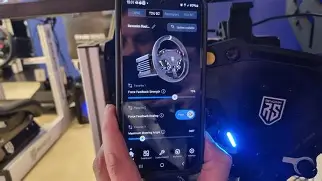
Another practical point: the Revosim’s software and firmware ecosystem matters. Without the right drivers or game profiles, force feedback and button mappings will underperform. Users who skip driver installation or fail to verify platform support (PC vs specific console models) encounter limits that are preventable with a little preparation.
Real-world use cases
- Casual console racers: Plug-and-play simplicity matters. Casual players appreciate an instantly improved wheel feel for arcade-to-sim titles.
- PC sim racers on a budget: Users wanting better telemetry and FFB tuning for titles like iRacing or Assetto Corsa may choose Revosim for value, but must invest time configuring software and possibly upgrading pedals.
- Esports or competitive players: Precision and consistent inputs are key. These buyers often pair a Revosim with higher-quality pedals or a dedicated shifter and verify settings per-title to avoid input variance.
- Rookie cockpit builders: Those assembling a small cockpit need to check mounting compatibility and power needs; a stiffer rig vastly improves the perceived quality of the wheel.
Common buying mistakes and how to avoid them
Below are the most frequent errors made when purchasing a Nacon Revosim wheel, followed by practical advice to prevent each one.
Mistake 1: Assuming “better than a gamepad” equals “high-end sim experience”
Why it matters: The Revosim improves immersion compared with a gamepad, but it is not a direct-drive competition wheel. Expecting professional-grade force feedback without understanding the underlying hardware leads to disappointment.
How to avoid it: Set realistic expectations. If the goal is authentic motorsport feel with fine-grain tire distortion and track irregularities, research direct-drive systems. If the goal is clear improvement for casual to serious racing on a budget, the Revosim is a valid choice.
Mistake 2: Ignoring compatibility and driver requirements
Why it matters: Some users assume the wheel is fully plug-and-play; others assume PC compatibility is identical to console. In practice, optimal performance often requires installing drivers or proprietary software and verifying game support.
Find top-rated Electronics products at great prices.
See Deals →How to avoid it: Before buying, check platform support for the specific Revosim model. Confirm driver availability and read user reports for the games the buyer plays. Plan time for setup and firmware updates after unboxing.
Mistake 3: Overlooking pedal quality and setup
Why it matters: A high-quality wheel cannot compensate for poor pedals. Pedal feel, travel, and modulation are central to throttle and braking precision. Many Revosim bundles include basic pedals that may be adequate for casual play but insufficient for advanced users.
How to avoid it: Budget for pedal upgrades if accuracy matters. Test pedal geometry (spacing, travel) or confirm whether an aftermarket load cell or progressive spring upgrade is possible with the chosen model.
Mistake 4: Failing to secure the wheel to a proper rig
Why it matters: A wheel that flexes or shifts under braking will feel weak and imprecise. Many negative reviews arise from poor mounting rather than hardware defects.
How to avoid it: Use a dedicated racing cockpit or a robust wheel stand. Check the wheel’s mounting pattern and verify fitment with the intended desk or rig before purchase. Measure clearances for pedals and seat position to ensure ergonomics.
Mistake 5: Not accounting for noise, heat, and maintenance
Why it matters: Gear-driven and belt-driven wheels produce different acoustics and wear characteristics. Long race sessions can generate heat that affects performance over time.
How to avoid it: Read community experiences about heat and noise for the targeted Revosim model. Factor in periodic maintenance like belt tension checks or lubrication (if applicable) and ensure ventilation in long sessions.
Mistake 6: Skipping community research on FFB profiles
Why it matters: Many users fine-tune force feedback with community profiles per game. Without these adjustments, the wheel’s default feel may not reflect its full potential.
How to avoid it: Search for recommended FFB settings for specific titles and save profiles. Join forums or social groups to access updated configurations and firmware tips.
Pros & Cons
- Pros
- Good value for users upgrading from controllers
- Solid button and paddle layout suitable for console and PC use
- Adjustable rotation and force feedback settings for varied driving styles
- Typically lighter and easier to set up than direct-drive systems
- Compatibility with a range of cockpits and wheel stands
- Cons
- Not equivalent to direct-drive wheels in torque fidelity
- Included pedals are often entry-level and may need upgrading
- Quality and linearity of force feedback can depend on firmware and game profiles
- Potential for mechanical noise or maintenance with prolonged heavy use
- Power and mounting requirements overlooked by casual buyers
Comparison: Revosim vs. entry-level belt-drive vs. direct-drive
| Aspect | Nacon Revosim (mid-range) | Entry-level belt-drive | Direct-drive |
|---|---|---|---|
| Force feedback fidelity | Good for immersive play; tuned for console/PC titles | Moderate; softer, with less detail at low torque | Exceptional; highest detail and responsiveness |
| Torque output | Enough for strong sensations without overpowering | Lower torque limits | Very high; requires robust mounting and power |
| Price (typical) | Mid-range: affordable upgrade | Budget-friendly | High-end; significant investment |
| Upgrade path | Some modularity; pedals often replaceable | Limited; often bundled packages | Highly modular; interchangeable rims/pedals |
| Ease of setup | Relatively simple; needs driver/configuration | Simple; basic drivers | Complex; requires calibration and secure rig |
| Best for | Serious hobbyists on a budget; console/PC crossover | Newcomers and casual players | Competitive sim racers and enthusiasts seeking top realism |
Buying guide: What to check before purchasing a Nacon Revosim
To make the most informed purchase decision, buyers should evaluate their needs against a checklist that covers compatibility, hardware, ergonomics, and upgrades. The sections below walk through each consideration and explain why it matters in practical terms.
1. Know the intended platform and game support
Verify whether the specific Revosim model supports the buyer’s primary platform (PC, PlayStation, or Xbox) and whether popular titles used by the buyer have known profiles or driver support. Confirm whether drivers or companion software are required for full functionality and whether those drivers are maintained.
Discover deals on Electronics — updated daily.
View Offers →2. Decide on the desired force feedback behavior
FFB is not a single metric; it includes strength, linearity, smoothness, and responsiveness. Buyers should watch demo videos, read community impressions, and if possible test a unit in person to determine whether the Revosim’s feedback matches their expectations. Consider how much fine detail the buyer needs — if subtle cueing of tire slip is essential, a direct-drive system may be more appropriate.
3. Evaluate the pedal set and upgrade options
Pedals are as important as the wheel. Check whether the Revosim bundle includes pedals, their build material (plastic vs. metal), and whether the unit accepts aftermarket pedals or load-cell upgrades. For users who brake late and hard, a load-cell brake dramatically improves consistency and feedback.
4. Assess mounting and cockpit compatibility
Measure the cockpit or desk intended for use. Confirm the wheel’s mounting interface and whether adapters are necessary. A secure mount reduces flex and improves feedback fidelity. Also check that there is space for cable routing, pedal placement, and seat adjustment.
5. Consider power, noise, and thermal characteristics
Understand the power supply needs: some performance wheels require dedicated external power. Read community reports about noise during heavy sessions and whether the wheel generates perceptible heat. These factors affect where the wheel is installed (open room vs. small office).
6. Read warranty and support terms
Check warranty duration and what it covers. Verify the manufacturer’s support channels and the presence of an active user community. A responsive support infrastructure helps resolve firmware and calibration issues quickly.
7. Factor in future upgrades and modularity
Evaluate whether the wheel allows swapping rims, pedals, or adding accessories like shifters and handbrakes. Modularity can extend a wheel’s useful life and improve long-term value.
8. Budget realistically
Include extras in the budget: better pedals, a stand or cockpit, and possibly a shifter or load-cell upgrade. Buyers who allocate a small fraction of their total sim budget to the wheel and expect top-tier performance often end up disappointed.
Practical setup tips after purchase
- Install official drivers and firmware updates before first use to ensure the latest improvements and bug fixes.
- Create per-game profiles and save them; community-sourced profiles are a useful starting point.
- Securely mount the wheel and confirm pedal placement for natural driving ergonomics; aim for a comfortable reach and correct leg angle at the pedals.
- Start with conservative force feedback settings and gradually increase strength while tuning damping and linearity until the wheel feels consistent across different tracks.
- Monitor heat during long practice sessions; allow the motor housing to cool between events if temperatures rise noticeably.
Conclusion
The Nacon Revosim racing wheel offers a compelling middle ground for sim racers who want a meaningful step up from controllers without the financial or logistical complexity of high-end direct-drive systems. Many complaints about the Revosim stem not from the wheel itself but from mismatched expectations, inadequate peripherals, or improper setup. By understanding the product’s strengths and limits, checking compatibility, budgeting for quality pedals and a rigid mount, and taking time to tune drivers and game profiles, buyers can avoid the common pitfalls and get a satisfying sim experience.
In short: evaluate use cases honestly, plan the full setup (wheel, pedals, mount, software), and treat the Revosim as part of a system rather than a standalone magic fix. With realistic expectations and some setup effort, the Revosim line can be a durable and enjoyable component of a sim-racing rig.