Ath M20X Review: Real User Experience After 3 Months
I've been using the Ath M20X for about three months now — daily sessions that include editing podcasts, casual listening on the commute, gaming evenings, and a few mixing checks. I bought these because I wanted an inexpensive, closed-back pair that I could rely on for both monitoring and everyday use without worrying about losing an expensive set. What follows is my honest, first‑hand account: the things I liked, the things that annoyed me, and where I think these headphones make sense (and where they don't).
Why I chose the Ath M20X
To be upfront: I wasn't expecting miracles. I wanted a workhorse that balanced decent monitoring accuracy with comfort and isolation at a price that wouldn't sting if it got banged around in a bag. I also specifically wanted closed-back headphones so I could work in a noisy home environment without bothering others. After reading a mix of impressions and checking local availability, I pulled the trigger and started using them every day.
First impressions out of the box
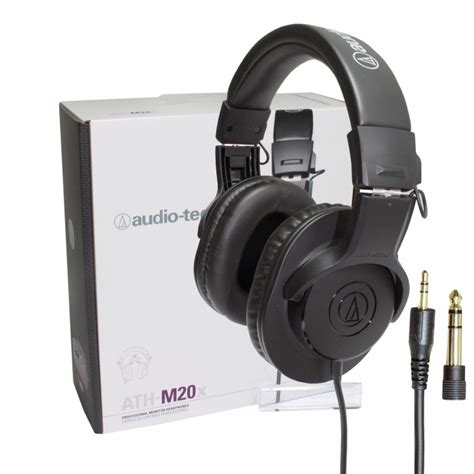
Out of the box, the Ath M20X felt light and utilitarian. There's no flashy finish or metal everywhere — it feels like a budget-oriented tool. The headband is thin but adequately padded, and the earcups sit around my ears rather than completely enveloping very large ears. The cable is fixed and reasonably long, which I appreciated for studio use but noticed immediately that it wasn't detachable. That was a little disappointing given how often I unplug and move between laptop, audio interface, and phone.
Build quality and comfort
After three months of regular use, my assessment on build and comfort is mixed. On the plus side, they've survived being tossed into a backpack, a couple of accidental drops at desk height, and regular on/off use without any creaks or broken pieces. The plastic feels thick enough to resist immediate damage, and the swivel on the cups still works smoothly.
Comfort-wise, I can wear them for 60–90 minutes comfortably. Beyond that, I notice pressure across the top of my head and some heat build-up on warmer days. The ear pads start soft but compress over a few weeks; by week six I had to readjust my sessions because the seal changed slightly and I felt more clamp force. If you have very large ears or prefer cloud-like padding, these won't match higher-end models. For me, the comfort is acceptable for work sessions and commuting, but not luxurious.
Specifics I noticed
- I noticed the left earpad flattened slightly faster than the right — subtle, but after a month I could feel the difference when switching ears while mixing.
- The headband padding is stitched in a way that looks robust, but the thinness means you can feel band pressure on longer sessions.
- The fixed cable is a convenience in that it won't unplug, but it's also a point of failure if the cable wears at the junction — something to watch for.
Sound: the detailed breakdown
Sound is where these headphones surprised me. For the price range, the Ath M20X provides a straightforward and useful sound signature for several use cases, though not without trade-offs.
Bass
Low frequencies are punchy and present. I appreciate the bass for electronic music and film soundtracks — it gives the impact you want without being unbearably boomy. That said, the bass isn't the tightest; sub-bass extension is adequate but not deep. For careful low-end mixing I still used reference monitors, but for quick checks and casual listening the bass performance felt satisfying.
Mids
Midrange is where these headphones are most useful for me. Vocals and acoustic instruments come through clearly and with good presence. I found dialogue clarity excellent for editing podcasts and watching interviews. There is a mild coloration — a little warmth that makes voices pleasant — but nothing that distorted my perception of balance when making rough edits.
Treble
The highs are respectable but not pristine. Cymbals and hi-hats have enough sparkle to be heard, but on bright tracks at higher volumes the treble can feel a touch forward and a bit grainy. I avoided cranking the volume when trying to check fine upper-frequency detail because that’s where fatigue sets in.
Find top-rated Audio & Headphones products at great prices.
Browse Now →Soundstage and imaging
Don't expect an expansive soundstage. These are closed-back cans, and the presentation is relatively intimate — good for focused listening and reducing environmental bleed, but not ideal when you want that open, airy sense of space. Imaging is surprisingly decent for the price; I could place elements left to right with reasonable confidence during quick mix checks.
Performance in real-world use
Here are concrete ways I used the Ath M20X and what I found.
Podcast editing and voice work
For editing and cleaning up voice recordings, these were excellent. I could hear plosives, breaths, and room resonance without constantly reaching for a different pair. The closed-back design helped me focus in a noisy household. I was surprised at how reliably I could judge vocal clarity with these on.
Music listening
For casual listening, these are fun. Bass-heavy tracks feel alive, and vocal-forward mixes sound engaging. For audiophile-level listening, I did miss the resolution and refinement of pricier models, particularly in the treble and microdetail department.
Gaming and movies
They worked well for gaming and watching movies at night — solid impact, convincing mid-bass, and clear dialogue. The slightly narrower stage means I wouldn't rely on them for pinpoint positional accuracy in competitive shooters, but for single-player games and films they deliver an immersive experience.
Commuting
Noise isolation is decent; they block a fair amount of ambient bus/train noise. The closed back and snug fit make for a good commute companion. However, the lack of folding hinges and the non-detachable cable made them less pocket-friendly than some travel-focused models.
Durability and how they held up
After three months, the headphones show normal signs of wear: the ear pads are a little compressed, the matte plastic shows faint scuffs, and the cable has a slight kink near where it meets my desk. Nothing has broken, and the hinge screws remain tight. If you're rough with gear, I'd suggest using a small protective case to avoid scratches and to prolong pad life. I haven't replaced any parts yet, but I did buy a pair of aftermarket pads to try at month two and the difference in comfort was noticeable.
Accessories and portability
The package is basic — no hard case, no airline adapter, nothing fancy. That fits the price point, but be prepared to invest in a case if you plan to carry them around. The fixed cable is long enough for studio setups, but it tucks awkwardly for commuting. I appreciated the included straight cable for desktop work but would have preferred some modularity.
Shop the latest Audio & Headphones picks on Amazon.
Shop Amazon →Comparison: Ath M20X vs other common options
| Model | Relative Price | Sound Character | Build & Comfort | Best For |
|---|---|---|---|---|
| Ath M20X | Entry | Punchy bass, clear mids, slightly forward treble | Light, functional; good for short to medium sessions | Everyday monitoring, podcast editing, commuting |
| Mid‑range studio cans (comparable) | Mid | More balanced, tighter bass, cleaner highs | Sturdier, more padding; better long-session comfort | Mixing, longer studio sessions, critical listening |
| Higher-end reference cans | Premium | Very neutral, high resolution, extended highs and lows | Robust metal parts, plush pads for long wear | Professional mixing, mastering, audiophile listening |
Note: The table above is a broad-strokes comparison to help place the Ath M20X in context. Your mileage will vary depending on the exact mid‑range or premium models you compare it to.
Pros & Cons
- Pros
- Great value: solid sound quality for the price in the low/entry bracket.
- Clear midrange — very useful for voice work and quick mixing checks.
- Punchy bass that makes music enjoyable outside of a critical listening context.
- Lightweight and durable enough for daily use without delicate handling.
- Closed-back isolation helps when working in noisy environments.
- Cons
- Cable is fixed and not detachable — reduces portability and repair options.
- Ear pads compress over time; long sessions can become uncomfortable.
- Treble can be slightly grainy at high volumes, leading to listener fatigue.
- Basic accessories — no hard case or extra cable included.
- Soundstage is intimate rather than open; not ideal for spatially critical work.
Buying guide: what to consider before you buy
If you're deciding whether the Ath M20X is right for you, here are the practical points I used when choosing them and that you should consider:
- Purpose: Are you buying for casual listening, podcast editing, mixing, or commuting? The M20X excels at casual listening and voice work; for critical mixing, consider auditioning something more neutral.
- Comfort needs: Think about how long your typical sessions are. If you often wear cans for 3–4 hours straight, the thinner headband padding may become a factor.
- Portability: Do you need something pocketable or travel-friendly? If yes, look for folding designs and detachable cables; the M20X is less optimized for on-the-go since it lacks advanced folding and swaps.
- Isolation vs. openness: Closed-back design means less bleed and better isolation, which is great for noisy spaces. If you prefer an open soundstage for mixing or classical music, open-back alternatives are better.
- Future maintenance: Check whether earpads and cables are easy to replace. I found aftermarket pads made a big comfort improvement, so factor potential upgrade costs into your decision.
- Source and volume: The Ath M20X is easy to drive from phones and laptops, but you'll hear better dynamics from a dedicated interface or amp. If you already have one, expect a noticeable improvement.
Who should consider the Ath M20X?
In my experience, the Ath M20X is a very good option if you:
- Want affordable closed-back headphones for podcasting, content creation, or casual studio work.
- Need something durable and unobtrusive for daily commuting with decent isolation.
- Prefer a slightly warm midrange and punchy bass without spending a lot.
Consider other options if you:
- Need an expansive soundstage for mixing or orchestral music.
- Require long-session comfort with plush earcups and a robust headband.
- Want detachable cables or folding portability as key features.
Final thoughts and conclusion
After three months with the Ath M20X, I can say I got what I paid for and then some. They aren't a perfect, high-fidelity studio reference, but they're honest, practical headphones that make day-to-day audio tasks easier without breaking the bank. I appreciated the clear mids for vocal work, the satisfying low-end for music and film, and the overall resilience during daily handling. The biggest things that bothered me were the fixed cable, the mild treble grain at high volumes, and the gradual compression of the ear pads — all fixable issues, but worth noting.
In my experience, these are a smart pick if you want a dependable pair of closed-back headphones for content creation and casual listening on a budget. If you need surgical mixing accuracy, prolonged comfort for marathon sessions, or travel-focused features, you may want to step up to a more expensive model. For everything else, the Ath M20X has been a reliable companion in my workflow and my daily routine.